Whitireia Access
The Whitireia Park Restoration Group, started restoring Onehunga Bay coastal ecosystems 20 years ago. Onehunga Bay was the only area fenced off from the cows which used to graze most of the park. Following an extensive fire in 2010, their restoration efforts have broadened to cover many other ecosystem types in the park.
When the group began restoration work the park was administered by the Department of Conservation and Robyn Smith was a member of the park board, specifically appointed by the Minister to start ecological restoration in the park. The park is now administered by the Whitireia Park Board made up of 3 Ngāti Toa reps and 3 regional councillors. Greater Wellington Regional Council organise operational work.
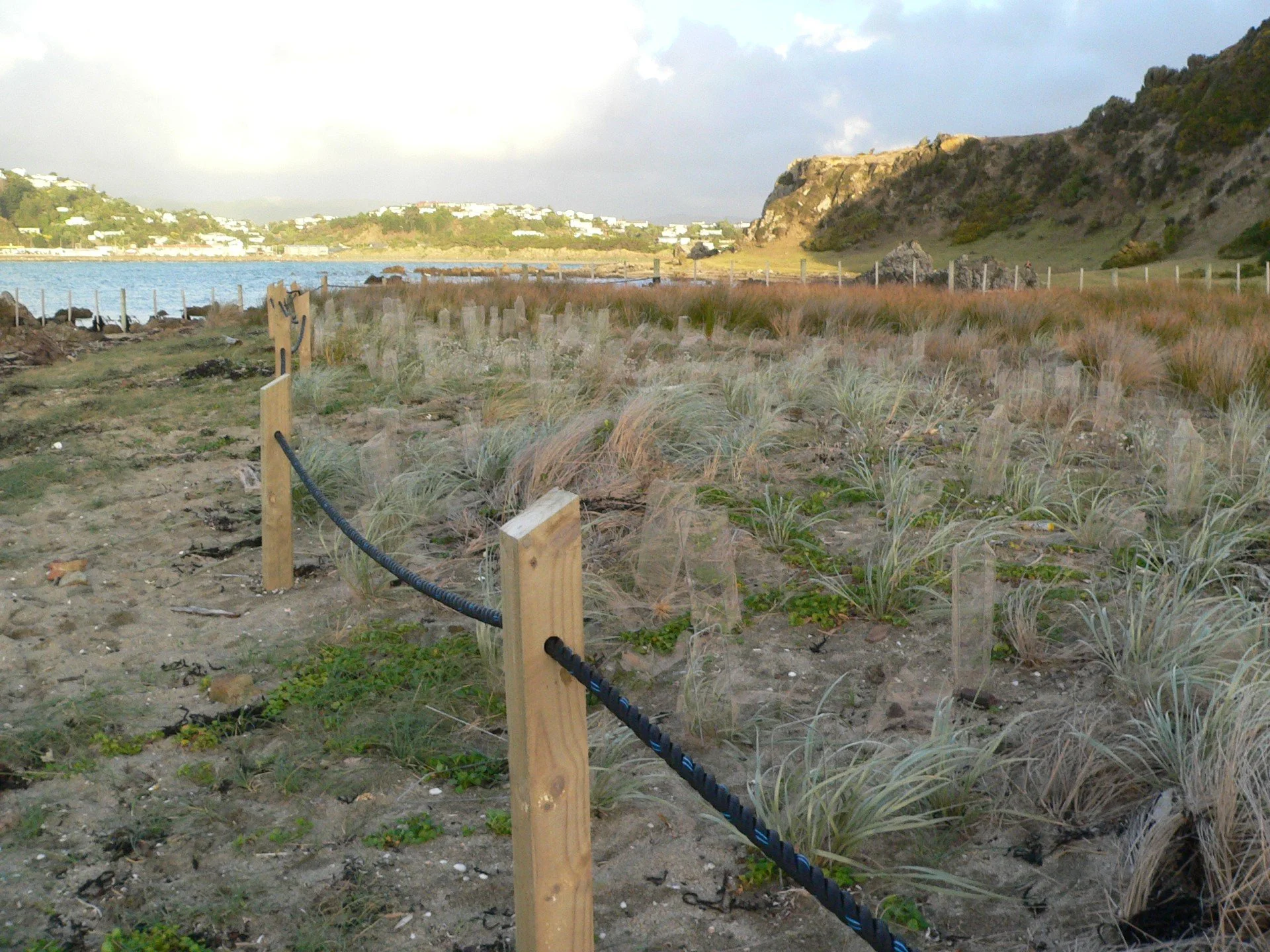
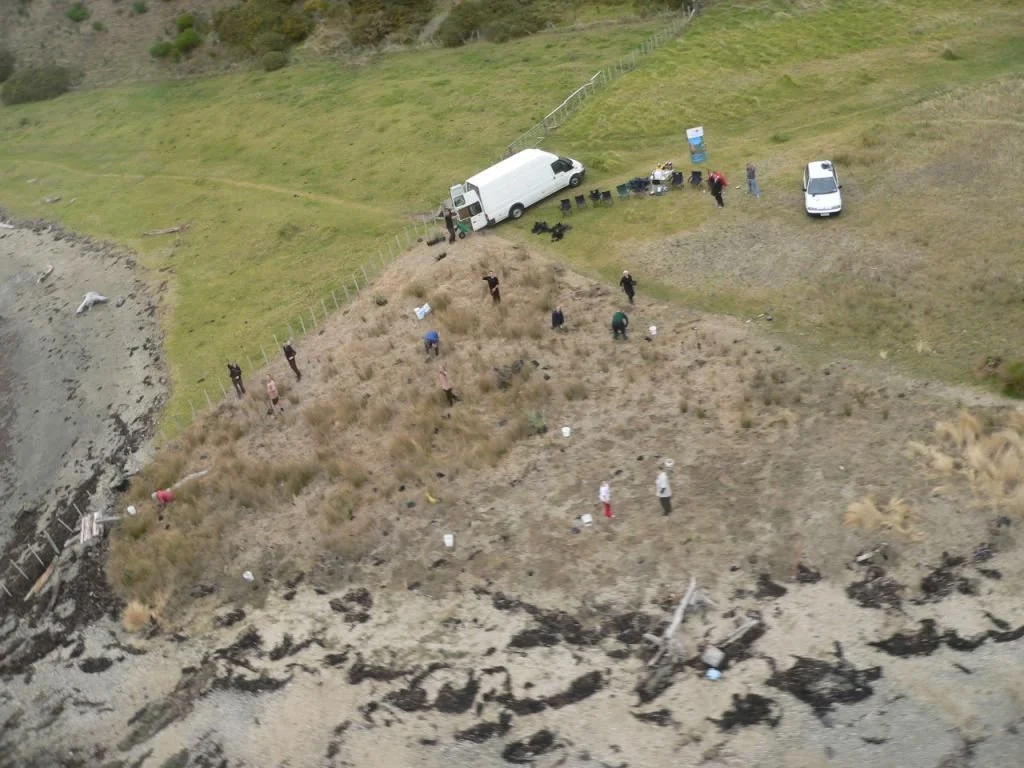
The group started off restoring a wetland behind the Onehunga Bay carpark in 2006 and then started planting the dunes from the eastern end of the beach, mainly because there were a lot of motorbikes who would rip up plantings closer to the carpark. They added thick rope through bollards to keep the motorbikes out.
Why restore dunes? Nationally most dune systems have been destroyed by clearance for grazing, subdivision, trampling, exotic species planting and pest animal damage. By the early 1900s there had been a reduction of active duneland by 70%. Most of the rest was highly modified (i.e. not functioning naturally as they should). The massive increase of coastal subdivisions over the past century and a quarter has further reduced duneland extent to less than 10% of their original extent and they are classified as Endangered as are many key plants in dunes.
As a trustee of the Coastal Restoration Trust (previously called the Dune Restoration Trust) in the early 2000s, Robyn Smith learned how to restore dunes and put that into practice at Onehunga Bay and later Kaiaua Bay in Whitireia Park.
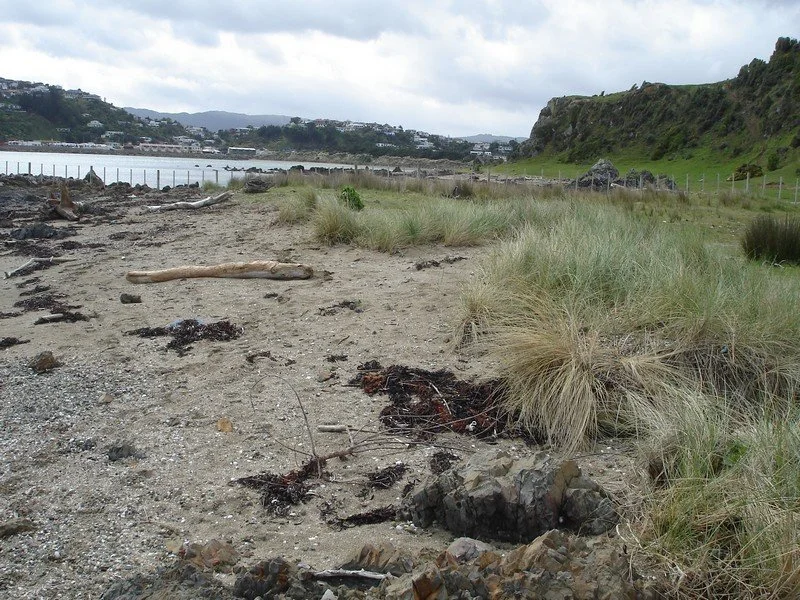
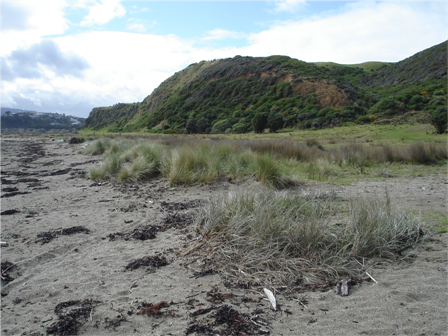
Despite being grazed for decades, Onehunga Bay still had a small area of naturally occurring kōwhangatara, Spinifex sericeus, around the main entrance of the beach. The group’s restoration efforts finally joined up the existing spinifex to the planted areas along the Onehunga Bay foreshore. They have also reintroduced pīngao (Ficinia spiralis), tātaraheke, (Coprosma acerosa) and speckled sedge (Carex testacea). Pīngao was extinct in the Porirua district until we planted it. It is not only a superb sand binder but its leaves are once again able to be used for weaving by Ngāti Toa. To get to the fully functioning dune at Onehunga Bay, volunteers have planted, weeded and monitored thousands of plants. Over the last decade they have also added hundreds of backdune species. This is an ongoing project and will be for another decade.
Foredune species cannot grow when being trampled (https://www.coastalrestorationtrust.org.nz/site/assets/files/1185/10.1_human_modification.pdf) which is why the kōwhangatara at the main entrance to the beach looks flattened and is dying. Until Onehunga Bay became very popular with kiteboarders over the past 2 years, the access to the main beach was via two tracks fairly close together in the area which is being trampled. We will suffer a small area of trampling, however we do want that area defined and kiteboarders to respect the boundaries of that area as most other beach users do. Many dune systems are fenced off around the country to prevent trampling by beach users and to guide people to accessways and this may become an option if people can't stick to the current extent of the accessway. We would prefer that not to happen as it costs time and money.
Here are some links for the Coastal Restoration Trust which explain how dunes work and a link to a series of short videos on dune systems
From the coastal Restoration Handbook
https://www.coastalrestorationtrust.org.nz/dune-restoration/how-dunes-work/
https://www.coastalrestorationtrust.org.nz/site/assets/files/1185/9.2_accessways.pdf
Video series
https://www.coastalrestorationtrust.org.nz/resources/crt-resources/our-coast-video-series/
White Cloud recommenation
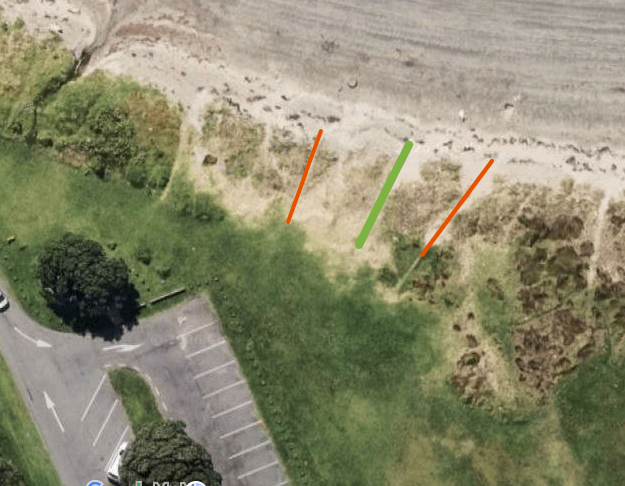
Instead of using the multiple tracks to access the beach (red lines), let's try to stick to one path (green line) to minimise the impact.